Gold and Stock Market Correlation: Understanding the Relationship
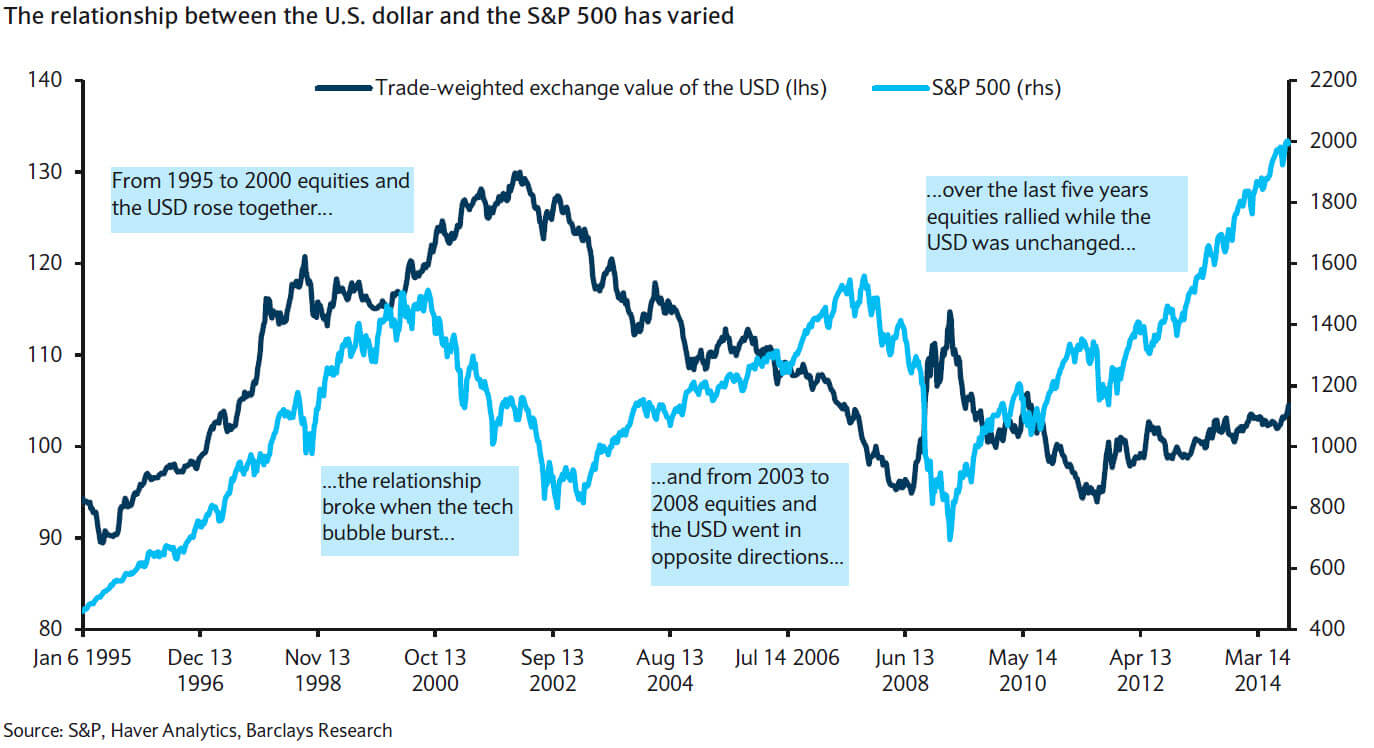
Gold and the stock market are two prominent financial assets often analyzed for their relationship to each other. Understanding this correlation is crucial for portfolio management, risk assessment, and investment strategies.

Types of Correlation
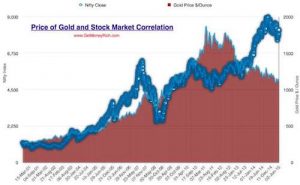
- Positive Correlation: Gold and the stock market move in the same direction (i.e., both rise or fall).
- Negative Correlation: Gold and the stock market move in opposite directions (i.e., one rises while the other falls).
- No Correlation: Gold and the stock market show no consistent relationship in their movements.
Historical Correlation
Historically, gold and the stock market have exhibited a weak positive correlation. This means that during periods of economic growth and rising stock prices, gold prices tend to also increase. However, this correlation is not absolute and can vary over time.
Factors Influencing Correlation
Several factors can influence the correlation between gold and the stock market:
- Inflation: Gold is often considered an inflation hedge, as its value tends to rise with increasing inflation. When stock markets decline due to inflation concerns, gold may provide a safe haven for investors.
- Economic Growth: Gold prices can be influenced by economic growth expectations. In times of strong economic growth, investors tend to favor riskier assets like stocks, while gold may see lower demand.
- Interest Rates: Rising interest rates can make it less attractive to hold gold, as it does not pay interest. This can lead to a negative correlation between gold and the stock market, especially in bond-heavy portfolios.
- Geopolitical Events: Uncertainties and market volatility caused by geopolitical events can trigger a flight to safety, driving up the demand for gold. This can lead to a positive correlation with the stock market, as investors seek alternative sources of diversification.
Implications for Investors
Understanding the correlation between gold and the stock market can help investors make informed decisions:
- Diversification: Including gold in a portfolio can diversify risk, as it may perform differently from stocks during market downturns.
- Hedging against Inflation: Gold can help hedge against inflation, providing a potential buffer against the erosion of purchasing power.
- Risk Management: Monitoring the correlation between gold and the stock market can help investors adjust their portfolios to mitigate risk.
- Tactical Allocation: Investors may consider allocating funds to gold tactically during periods of market volatility or geopolitical uncertainty, when a positive correlation with the stock market is expected.
Conclusion
The correlation between gold and the stock market can vary but has historically been weakly positive. Understanding the factors influencing this relationship is crucial for investors seeking diversification, hedging against inflation, and managing risk. By incorporating gold into portfolios strategically, investors can enhance their investment strategies and navigate market fluctuations more effectively.Gold und Börse: Zusammenhänge verstehen
Zusammenfassung
Die Beziehung zwischen Gold und dem Aktienmarkt ist komplex und vielschichtig. Diese Ausarbeitung untersucht die historischen Zusammenhänge zwischen den beiden Anlageklassen und beleuchtet die Faktoren, die ihre Interaktion beeinflussen. Durch das Verständnis dieser Zusammenhänge können Investoren fundierte Entscheidungen treffen und ihre Portfolios entsprechend anpassen.
Einleitung
Gold und Aktien sind seit Jahrhunderten beliebte Anlageinstrumente mit unterschiedlichen Risikoprofilen. Während Gold traditionell als sicherer Hafen in unsicheren Zeiten gilt, bieten Aktien das Potenzial für höhere Renditen. Das Verständnis der Zusammenhänge zwischen diesen Anlageklassen ist entscheidend für die Entwicklung einer ausgewogenen Anlagestrategie.
FAQs
- Beeinflusst Gold den Aktienmarkt?
- Gold kann in Zeiten wirtschaftlicher Unsicherheit als Zufluchtsort dienen und dem Aktienmarkt entgegenwirken.
- Umgekehrt kann eine starke Aktienmarktperformance die Nachfrage nach Gold als Absicherung verringern.
- Wie wirkt sich Inflation auf die Beziehung zwischen Gold und dem Aktienmarkt aus?
- Inflation kann den Goldpreis antreiben, da Investoren versuchen, ihren Wohlstand zu schützen.
- Hohe Inflation kann sich jedoch auch negativ auf den Aktienmarkt auswirken und die Anleger zu Goldanlagen verleiten.
- Was treibt die Korrelation zwischen Gold und dem Aktienmarkt an?
- Wirtschaftliche Unsicherheit
- Inflation
- Geopolitische Risiken
- Anlegerstimmung
Subthemen
Gold als sicherer Hafen
- Definition: Gold ist ein Vermögenswert, der in Zeiten wirtschaftlicher Unsicherheit an Wert gewinnt.
- Faktoren:
- Geopolitische Risiken
- Finanzkrisen
- Rezessionen
- Auswirkungen:
- Steigender Goldpreis
- Fallende Aktienkurse
Inflation und Gold
- Definition: Inflation ist ein Anstieg des allgemeinen Preisniveaus.
- Faktoren:
- Erhöhung der Geldmenge
- Nachfrageüberhang
- Störungen der Lieferkette
- Auswirkungen:
- Steigender Goldpreis
- Rückgang des Realwerts von Aktien
Geopolitische Risiken und Gold
- Definition: Geopolitische Risiken beziehen sich auf politische oder militärische Spannungen zwischen Ländern.
- Faktoren:
- Kriege oder Konflikte
- Handelsstreitigkeiten
- Terrorismus
- Auswirkungen:
- Steigender Goldpreis
- Fallende Aktienkurse
Anlegerstimmung und Gold
- Definition: Die Anlegerstimmung spiegelt die optimistische oder pessimistische Einstellung der Anleger wider.
- Faktoren:
- Wirtschaftsdaten
- Nachrichtenereignisse
- Technische Analyse
- Auswirkungen:
- Eine positive Anlegerstimmung kann die Nachfrage nach Risikoanlagen wie Aktien erhöhen.
- Eine negative Anlegerstimmung kann zu einem Zufluchtsort in Gold führen.
Gold und Diversifikation
- Definition: Diversifikation ist eine Anlagestrategie zur Risikostreuung durch Investitionen in verschiedene Anlageklassen.
- Vorteile:
- Reduzierung des Gesamtrisikos
- Verbesserung der Rendite
- Implikationen:
- Gold kann als diversifizierendes Element in einem Portfolio dienen.
Schlussfolgerung
Die Beziehung zwischen Gold und dem Aktienmarkt ist dynamisch und vielschichtig. Obwohl Gold traditionell als sicherer Hafen gilt, kann es auch von anderen Faktoren wie Inflation, geopolitischen Risiken und Anlegerstimmung beeinflusst werden. Durch das Verständnis dieser Zusammenhänge können Investoren ihre Portfolios optimieren und fundierte Entscheidungen treffen, die auf ihre individuellen Anlageziele und Risikobereitschaft abgestimmt sind.
Keyword-Tags
- Gold
- Aktienmarkt
- Sicherer Hafen
- Inflation
- Diversifikation