
aChia.eu – Market segmentation is the process of dividing a large market into smaller, more manageable groups of consumers who share common characteristics. It’s like taking a giant puzzle and breaking it down into smaller pieces, making it easier to understand and work with.
By dividing a market into segments, businesses can tailor their marketing efforts to specific groups of customers who are more likely to be interested in their products or services. Imagine trying to sell a luxury sports car to everyone in your town. Not everyone will be interested, but focusing on people with a high income and a passion for cars will increase your chances of success.
Importance
Market segmentation is essential for businesses of all sizes. In today’s competitive landscape, it’s crucial to target the right customers with the right message.
Think about it this way: Would you rather try to sell your product to everyone in the world or focus on a specific group of people who are most likely to buy it?
Market segmentation helps you focus your marketing efforts and resources, leading to a higher return on your investment.
Benefits
There are many benefits to using market segmentation:
- Increased Efficiency: By targeting specific customer segments, businesses can make the most of their marketing budget and resources.
- Enhanced Customer Relationships: By understanding your target customers, you can develop better products and services that meet their needs, leading to stronger customer relationships.
- Greater Sales and Profits: By targeting the right customers with the right message, you can increase sales and generate more revenue.
- Improved Brand Awareness: By focusing your marketing efforts, you can reach the right audience and build a strong brand presence.
- Competitive Advantage: Market segmentation allows businesses to identify unique opportunities and carve out a niche in the market, giving them a competitive advantage.
Learn more about AI and SEO: A Guide to Using AI Ethically and Effectively
Types of Market Segmentation:
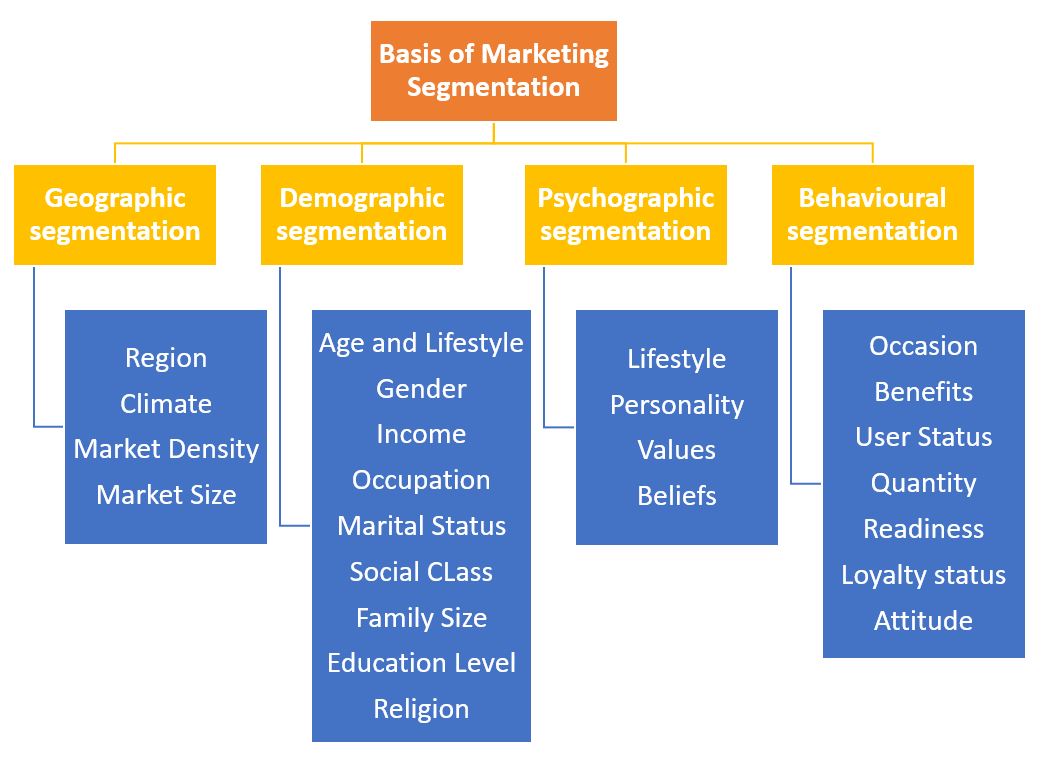
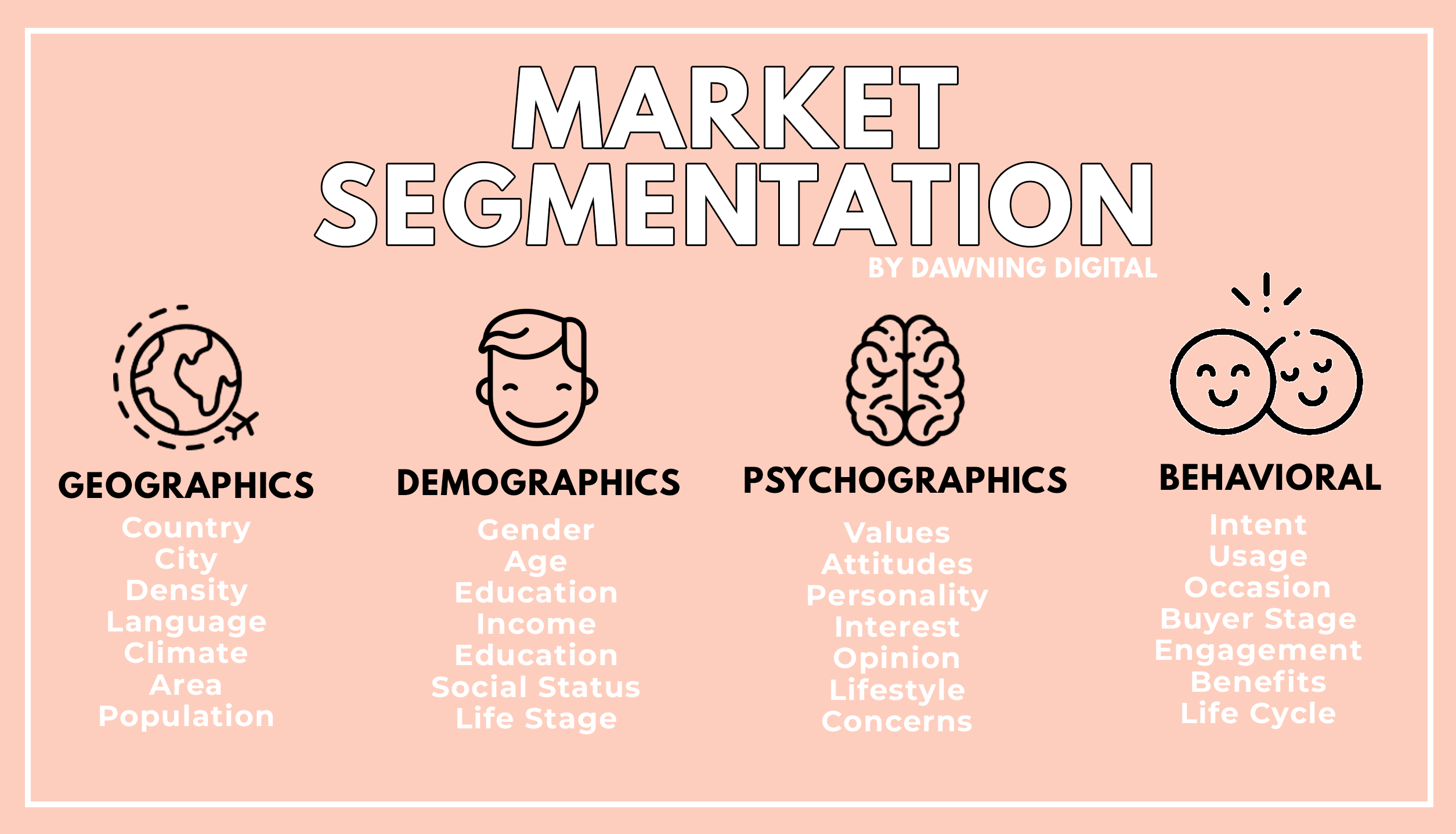
Market segmentation can be applied in a variety of ways. Here are some of the most common types:
Demographic Segmentation:
Demographic segmentation divides the market based on factors like:
- Age: Targeting a specific age group, such as teenagers, young adults, or seniors.
- Gender: Focusing on male or female consumers.
- Income: Targeting customers based on their income level.
- Education: Targeting consumers with different levels of education.
- Occupation: Focusing on customers within specific professions.
- Ethnicity: Targeting consumers based on their ethnic background.
- Family Size: Segmenting customers based on the size of their families.
Geographic Segmentation:
Geographic segmentation divides the market based on location:
- Country: Targeting consumers in a particular country.
- Region: Focusing on a specific region within a country.
- State: Targeting consumers in a particular state.
- City: Focusing on a specific city or urban area.
- Climate: Targeting consumers based on the climate of their region.
Psychographic Segmentation:
Psychographic segmentation dives into the minds and hearts of your customers, looking at factors like:
- Lifestyle: Targeting consumers who share similar lifestyles, hobbies, and interests.
- Values: Focusing on customers who hold similar values and beliefs.
- Personality Traits: Segmenting customers based on personality traits, such as adventurousness, introversion, or extroversion.
- Attitudes: Understanding customers’ attitudes toward your brand, your products, and your industry.
- Interests: Identifying customers’ passions and interests.
Behavioral Segmentation:
Behavioral segmentation looks at customer behavior and actions, such as:
- Usage Rate: Targeting consumers based on how frequently they use a product or service.
- Benefits Sought: Identifying what customers are looking for in a product or service.
- Loyalty Status: Segmenting customers based on their loyalty to your brand.
- Purchase Occasion: Targeting customers based on specific buying occasions (e.g., birthdays, holidays, special events).
- Online Behavior: Analyzing online behavior, such as website browsing history, search queries, and social media interactions.
Learn more about How the Stock Market Works: Unveiling the Magic
Steps to Effective Market Segmentation:
Here’s a step-by-step guide to help you implement market segmentation effectively:
Identify Your Target Market:
The first step is to understand who your target market is. What kind of people are most likely to be interested in your products or services? Ask yourself:
- What are their demographics? (age, gender, income, education, location, etc.)
- What are their psychographics? (lifestyle, values, personality, attitudes, interests)
- What are their behaviors? (usage rate, benefits sought, loyalty status, etc.)
- What are their needs and pain points? What problems are they trying to solve?
This process helps to develop a clearer picture of the ideal customer for your product or service.
Define Your Segmentation Variables:
Once you know your target market, you need to decide how to segment it. What variables will you use to divide the market into smaller groups?
This often involves choosing a combination of demographic, geographic, psychographic, and behavioral variables that best reflect the characteristics of your ideal customer.
Create Customer Profiles:
Based on your segmentation variables, create detailed profiles of your target customer segments. Think of it like creating a profile on a dating app: what are their interests, their goals, their lifestyle?
Customer profiles help you understand your customers’ needs and behaviors, allowing you to create more effective marketing campaigns.
Analyze and Prioritize Segments:
Not all customer segments are created equal. Some segments will be more valuable than others, based on factors like:
- Market Size: How many potential customers are in each segment?
- Profitability: How much revenue can you generate from each segment?
- Growth Potential: How much potential for growth is there in each segment?
- Accessibility: How easily can you reach and engage customers in each segment?
By analyzing and prioritizing segments, you can focus your marketing efforts on the most valuable customer groups.
Develop Targeted Marketing Strategies:
Once you have a clear understanding of your target segments, you can develop targeted marketing strategies that are designed to resonate with each group. These strategies might include:
- Content Marketing: Creating content that is specifically tailored to the interests and needs of each segment.
- Social Media Marketing: Using different social media platforms to reach different customer segments.
- Email Marketing: Creating targeted email campaigns based on customer preferences and behaviors.
- Paid Advertising: Running ads on specific platforms and targeting them to specific customer groups.
- Public Relations: Developing public relations campaigns that align with the interests of specific customer segments.
Learn more about How to Invest in the Stock Market
Market Segmentation in Action:
Here are a few examples of how market segmentation has been used successfully:
Case Study: Nike
Nike is a global sportswear giant that utilizes market segmentation to reach a broad range of consumers. They segment their market by:
- Demographic: Nike targets different age groups, genders, and income levels. Their “Just Do It” campaign appeals to a wide range of consumers.
- Lifestyle: They create products and campaigns that cater to different lifestyles, such as athletes, runners, fitness enthusiasts, and casual wearers.
- Psychographic: Nike targets consumers with a strong desire for performance, achievement, and individuality.
Case Study: Starbucks
Starbucks is known for its personalized approach to coffee and its customer-focused strategy. They segment their market based on:
- Demographic: Starbucks targets a wide range of demographics, including young adults, professionals, and families.
- Lifestyle: They create different experiences and products for different lifestyles. For example, their “Starbucks Reserve” line caters to discerning coffee enthusiasts, while their “Frappuccino” offerings appeal to a younger demographic.
- Psychographic: Starbucks targets customers who value convenience, community, and a sense of belonging.
Learn more about What Is Marketing Research? Your Ultimate Guide to Understanding the Market
The Future of Market Segmentation:
The future of market segmentation is exciting, driven by advancements in AI and big data analytics.
AI and Personalization:
AI-powered tools like HubSpot and Marketo are transforming the way businesses segment their markets. AI can:
- Analyze massive amounts of data: AI can process vast amounts of customer data to identify trends and patterns that would be impossible for humans to detect.
- Develop personalized customer profiles: AI can create highly detailed customer profiles that are tailored to individual preferences and behaviors.
- Generate targeted marketing campaigns: AI can develop personalized marketing messages, content, and campaigns that are more likely to resonate with individual customers.
Big Data Analytics:
Big data analytics provides businesses with an unprecedented amount of information about their customers. This data can be used to:
- Track customer behavior: Analyze online browsing history, purchase data, and social media interactions to understand customer preferences.
- Predict future behavior: Use machine learning algorithms to predict customer behavior, such as future purchases or potential churn.
- Improve customer segmentation: Use big data analytics to refine customer segments and identify new, previously untapped groups of customers.
Learn more about Forget Google, AI is the New Search King:
Wrap-Up
Market segmentation is an essential marketing strategy for businesses looking to maximize their reach and success. By understanding your target customers and developing tailored marketing campaigns, you can drive sales, build brand loyalty, and gain a competitive edge. As AI and big data continue to evolve, market segmentation is poised to become even more powerful and personalized, enabling businesses to engage with customers on a deeper level.